

The first time it happens, it’s exciting.
You notice a few visitors from Canada spending longer than usual on your Walmart Marketplace listings. A customer from Mexico sends a question about shipping. Maybe someone even tries to check out, only to discover the product isn’t available in their country.
For a minute, it feels like your business has outgrown its borders.
Then the practical questions arrive.
How do you handle customs? Will shipping costs eat into your margins? Do you need inventory outside the United States? If something goes wrong at the border, who’s responsible?
I’ve spoken with enough ecommerce operators to know what usually happens next. Someone says, “Let’s revisit this later,” and the idea quietly disappears into a folder called Future Plans.
That’s why Walmart’s latest announcement is worth paying attention to. It’s not flashy, and it probably won’t dominate industry headlines for weeks. Still, for businesses already using Walmart Fulfillment Services (WFS), it solves a problem that has been sitting in the background for years.
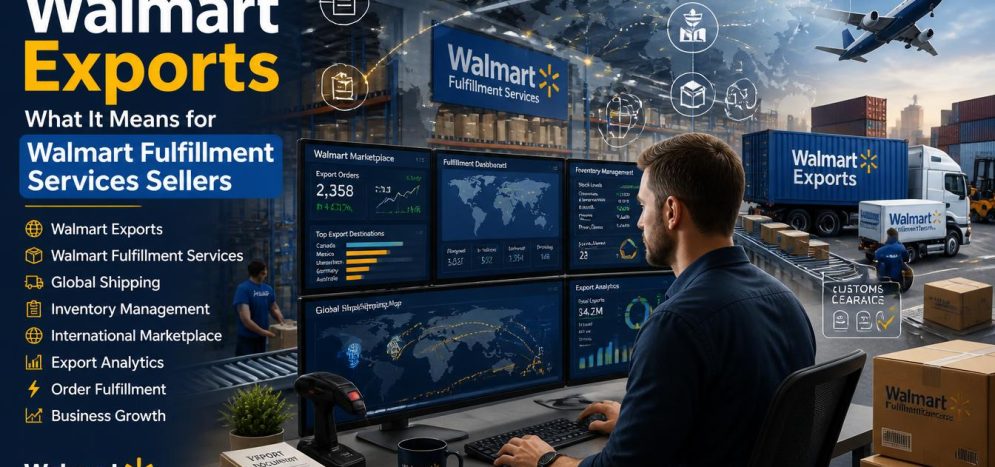
With Walmart Exports, eligible Marketplace sellers can reach customers in Canada and Mexico while Walmart takes care of much of the fulfillment and cross-border logistics. On paper, that sounds like another platform update. In practice, it removes one of the biggest reasons smaller businesses hesitate to expand.
The Hard Part Was Never Selling
People often assume international growth is mostly about finding customers.
It rarely is.
The internet has made products visible almost everywhere. A seller in Texas can attract shoppers from Toronto without spending a dollar on international advertising. The difficult part begins after someone decides to buy.
That’s where everything gets tangled.
Shipping carriers all have different pricing models. Customs paperwork isn’t exactly light reading. Product categories sometimes fall under different regulations depending on the country. One overlooked detail can delay a shipment or create extra costs that weren’t part of the original plan.
If you’re a company with an entire logistics department, that’s manageable.
If you’re running a seven-person business, it can feel like trying to solve a puzzle with half the pieces missing.
Walmart Isn’t Selling a Dream. It’s Removing Friction.
There’s something refreshing about that.
The company isn’t pretending international ecommerce suddenly becomes effortless. It doesn’t.
Inventory still has to be managed. Pricing still matters. Products still need accurate listings and enough stock to meet demand.
What changes is the amount of work sitting on the seller’s desk.
Eligible businesses continue sending inventory to Walmart fulfillment centers in the United States, just as they already do through Walmart Fulfillment Services. From there, Walmart coordinates much of the fulfillment process for qualifying cross-border orders.
It’s a quieter improvement than a shiny new seller dashboard, but arguably a more useful one.
Nobody opens an ecommerce business because they enjoy comparing customs requirements between countries.
Here’s a Situation That’s Probably More Common Than People Admit
Imagine a family-owned brand that makes reusable lunch containers.
Business is steady. The products have hundreds of positive reviews, and weekends are usually spent packing inventory instead of wondering where the next sale will come from.
One afternoon, the owner notices that website traffic from Canada has been climbing for months.
In the past, that information would have been frustrating. There was demand, but acting on it meant researching customs brokers, shipping providers, taxes, and import rules. That’s a lot to ask from a team that’s already stretched thin.
With Walmart Exports, testing that demand becomes far less intimidating.
The owner doesn’t need to commit to a massive international rollout. They can begin with a handful of proven products, monitor sales, and adjust as they learn.
That might sound cautious.
It should.
Most successful ecommerce businesses grow through a series of small, informed decisions rather than one dramatic leap.
Complexity Has a Cost Most People Never Measure
When people talk about expansion, they usually focus on shipping costs or marketplace fees.
Time gets ignored.
That’s a mistake.
An afternoon spent sorting out customs documentation is an afternoon that isn’t spent improving product photos, negotiating with suppliers, or launching your next bestseller.
Those hidden hours add up.
Reducing operational work isn’t just about convenience. It changes how a business spends its attention. And attention is often the resource growing companies have the least of.
One Inventory Pool Is Easier to Live With
Anyone who’s managed inventory across multiple locations knows how quickly things become messy.
One warehouse sells out faster than expected.
Another has products sitting untouched.
A promotion performs well in one region but leaves another short on stock.
Before long, you’re moving inventory around instead of moving the business forward.
By allowing eligible sellers to work from Walmart’s fulfillment network while reaching buyers in multiple markets, Walmart Exports keeps operations noticeably simpler.
That’s not a headline-grabbing feature.
It’s the sort of improvement you appreciate three months later, when you’re spending less time fixing inventory problems and more time planning what’s next.
Where Walmart 3PL Fulfillment Services Fit Into the Picture
One question pops up almost every time a marketplace expands its fulfillment capabilities.
“If Walmart is handling fulfillment, do I still need a 3PL?”
In many cases, yes.
Think about what happens before inventory ever reaches a Walmart fulfillment center. Products may need to be inspected, labeled, bundled, repackaged, or prepared according to Walmart’s requirements. If you’re sourcing from multiple manufacturers, those shipments often need to be consolidated before they’re ready to move.
That’s where a third-party logistics provider quietly earns its keep.
Imagine you’re importing kitchen gadgets from two suppliers. One shipment arrives a week early, the other gets delayed at the port. A good Walmart Fulfillment Service can receive both shipments, check for damage, organize the inventory, apply Walmart-compliant labels, and send everything to WFS once it’s ready. Instead of coordinating those moving pieces yourself, you have one partner handling the prep work.
The relationship isn’t really WFS versus a 3PL. It’s often WFS and a 3PL working together.
Many sellers also operate on more than one sales channel. They sell through Walmart Marketplace, Amazon, Shopify, and sometimes their own website. WFS is designed to fulfill Walmart orders, but businesses still need a way to manage inventory for the rest of their operation.
A Walmart 3PL can bridge that gap by storing inventory, fulfilling orders from other channels, handling returns, and keeping products moving while Walmart manages the Marketplace side of the business.
As more sellers expand internationally, having both systems working together can create a more flexible supply chain. Walmart handles fulfillment where it makes sense, while the Walmart Shipping Service supports everything happening before and around that process.
Comparison Table
| Traditional Cross-Border Selling | Walmart Exports with WFS |
| Seller coordinates customs and shipping | Walmart manages much of the fulfillment process |
| Multiple logistics providers | One integrated fulfillment network |
| Higher administrative workload | Simpler daily operations |
| Separate international planning | Centralized inventory management |
| Larger upfront commitment | Easier way to test new markets |
| More time spent on logistics | More time spent growing the business |
The Bigger Shift Is Easy to Miss
At first glance, Walmart Exports looks like another feature release. Every marketplace rolls out new tools, tweaks seller policies, or updates its logistics network. Most of those announcements come and go without changing much.
This one feels a little different.
It signals that Walmart is thinking beyond faster deliveries. The company is trying to make growth less complicated. That might sound like a subtle distinction, but for someone running an ecommerce business, it’s a meaningful one.
Years ago, marketplaces mainly connected buyers and sellers. Everything after the sale was your responsibility. Storage, shipping, returns, customs, inventory planning, carrier negotiations. If you wanted to reach another country, you pieced together your own system and hoped it held up during busy seasons.
That’s changing.
More marketplaces are becoming infrastructure providers. The less time sellers spend wrestling with logistics, the more likely they are to expand, launch new products, and keep selling on that platform.
There’s Still No Substitute for Good Decisions
It’s tempting to think easier logistics means faster growth.
Sometimes it does.
Sometimes it doesn’t.
Picture a small business that sells handmade desk organizers. They hear about Walmart Exports and immediately list every SKU for cross-border sales. A month later, half the products barely move while the best sellers keep going out of stock.
The problem wasn’t the fulfillment program.
It was the strategy.
A better approach is usually slower than people expect. Start with products that already sell consistently. Watch customer behavior. Read reviews carefully. If buyers in Canada keep asking the same question about sizing or packaging, that’s useful information. It tells you something you couldn’t have learned from a spreadsheet alone.
Good expansion isn’t about moving quickly.
It’s about learning quickly.
The Best Benefit Might Be the One Nobody Advertises
Whenever companies announce logistics updates, the conversation usually revolves around speed.
Faster shipping.
Quicker delivery.
Shorter transit times.
Fair enough. Customers care about those things.
But business owners tend to notice something else first.
Mental bandwidth.
Running an ecommerce store already means switching between supplier emails, inventory reports, customer messages, advertising dashboards, and order issues. By lunchtime, it can feel like you’ve had six different jobs.
Now add cross-border logistics to that list.
That’s where the wheels start to wobble.
If Walmart can remove part of that workload, it gives sellers something that’s surprisingly valuable: a quieter workday. Not an easy one. Just one with fewer fires to put out.
And honestly, that’s often enough.
Smaller Brands Could Benefit the Most
Large retailers have logistics specialists. If customs requirements change or shipping costs increase, someone inside the company is already working on it.
Smaller businesses don’t have that luxury.
Sometimes the person answering customer emails is also updating inventory, approving purchase orders, and posting on social media before heading home.
For teams like that, simplifying one operational process can have an outsized impact.
It creates room to think about growth instead of constantly reacting to problems.
That’s easy to underestimate until you’ve lived through it.
One Number Explains Why This Is Happening
Cross-border ecommerce isn’t a niche opportunity anymore.
According to the International Trade Administration (ITA), global business-to-consumer ecommerce sales are expected to reach $5.5 trillion by 2027, growing at an average annual rate of 14.4%.
When online commerce grows at that pace, marketplaces have a strong incentive to make international selling less intimidating. The easier it is for sellers to reach new customers, the stronger the marketplace becomes over time.
Reference: International Trade Administration, U.S. Department of Commerce
https://www.trade.gov/ecommerce-sales-size-forecast
Final Thoughts
After reading about Walmart Exports, I kept coming back to one idea.
This isn’t really a story about Canada or Mexico.
It’s a story about hesitation.
Every growing business reaches a point where the next opportunity looks promising, but the operational burden makes it feel just out of reach. International selling has lived in that space for a long time. Plenty of businesses wanted to expand. Far fewer wanted the paperwork, coordination, and uncertainty that came with it.
Walmart isn’t removing every obstacle. No fulfillment program can.
What it is doing is lowering the barrier enough that testing a new market feels practical instead of overwhelming.
That matters.
Sometimes growth doesn’t need a dramatic breakthrough. Sometimes it just needs one less reason to say, “We’ll deal with it next year.”
Frequently Asked Questions
Q1: What is Walmart Exports?
A: Walmart Exports is a cross-border program that allows eligible Walmart Marketplace sellers using Walmart Fulfillment Services (WFS) to offer qualifying products to customers in Canada and Mexico while Walmart manages much of the fulfillment and logistics process.
Q2: Do sellers need warehouses in Canada or Mexico?
A: No. Eligible inventory remains in Walmart fulfillment centers in the United States. Walmart coordinates the cross-border fulfillment process for qualifying orders.
Q3: Does Walmart handle customs?
A: For eligible products, Walmart manages much of the customs coordination and international shipping process, reducing the administrative work sellers typically face.
Q4: Should sellers expand with every product?
A: Probably not. A measured approach usually works better. Start with products that already perform well, monitor demand, and expand once you understand how customers in the new market respond.
Q5: Why is Walmart Exports important?
A: It removes much of the complexity that has traditionally discouraged smaller businesses from selling internationally. That gives Marketplace sellers a simpler way to explore new markets while continuing to use Walmart’s existing fulfillment network.