

Now, a customer places an order at 10:14 PM on a Tuesday night.
They are not thinking about your inventory system. They are not thinking about warehouse integrations, APIs, or Demandware fulfillment services.
They simply expect the package to arrive when you promised.
That expectation sounds simple, but behind that “Buy Now” button is a complicated network of systems trying to work together. The online store, inventory database, warehouse, shipping carrier, and customer communication tools all need to stay in sync.
When one part breaks, customers feel it immediately.
This is where many Demandware stores, now running on Salesforce Commerce Cloud, face a challenge. The storefront may be fast and reliable, but the fulfillment provider for Demandware has to be top-notch.
In 2026, best Demandware fulfillment services are no longer a nice upgrade. It is becoming a requirement for brands that want to compete.
The Real Problem Starts After Checkout
Many businesses spend months improving their online shopping experience. They redesign product pages, improve search, personalize recommendations, and optimize checkout.
Then the customer completes the purchase.
That is where the real test begins.
Imagine a fashion retailer running thousands of products through a Demandware store. A customer orders a jacket that appears available online. The payment goes through. The confirmation email arrives.
Everything looks perfect.
But the warehouse inventory was not updated quickly enough. Another customer purchased the same jacket from a different channel ten minutes earlier.
Now the company has to send an apology email.
The customer does not see this as an inventory synchronization problem. They see it as a broken promise.
These situations happen more often than many businesses realize. As brands add more products, warehouses, and sales channels, manual fulfillment processes start showing cracks.
Why Old Fulfillment Methods Cannot Keep Up
Traditional fulfillment systems were built for simpler operations.
A business might have had one warehouse, one website, and a limited number of daily orders. A spreadsheet or basic inventory tool could handle the workload.
That is not today’s reality.
A modern Demandware store may need to manage:
- Multiple warehouses across different regions
- Online and physical store inventory
- Marketplace orders
- International shipping requirements
- Customer returns and exchanges
- Real-time stock availability
Trying to manage this manually is like trying to direct traffic at a busy intersection without signals. Eventually, something goes wrong.
The best Demandware order fulfillment services bring automation into the process. They help different parts of the business communicate without constant human intervention.
The Importance of Real-Time Inventory Data
Inventory accuracy sounds like a technical issue, but it directly affects customer trust.
A shopper does not care whether inventory data comes from a warehouse management system or a commerce platform. They only care if the product they bought actually exists.
Real-time inventory visibility allows businesses to know:
- What products are available
- Where those products are located
- Which items are reserved
- How quickly an order can be delivered
For example, a footwear company may have inventory stored in Chicago, Dallas, and Los Angeles. A customer in California places an order.
Instead of automatically shipping from the first available location, a Demandware fulfillment solution can identify that the Los Angeles warehouse can deliver faster and at a lower cost.
The customer receives the order sooner. The business spends less on shipping.
Everyone wins.
A Fulfillment Company for Demandware Changes Everything
Many growing brands rely on third-party logistics providers to handle warehousing and shipping. This makes sense because businesses can focus on products and marketing while specialists manage operations.
The problem appears when the systems do not communicate properly.
A disconnected Demandware store and a Demandware fulfillment provider can create unnecessary delays.
Someone may need to manually transfer order details. Inventory updates may happen hours later. Customer tracking information may not appear quickly.
That small delay creates friction.
With proper integration, the process becomes much smoother.
An order placed on the website can automatically reach the warehouse. The warehouse can update the order status. Tracking details can return to the customer without anyone manually entering information.
It sounds basic, but at scale, these small improvements save thousands of hours.
Automation Does Not Replace Teams. It Helps Them.
There is sometimes a misconception that automation is about removing people from operations.
That is not the goal.
The purpose is to remove repetitive tasks that slow teams down.
Warehouse employees should not spend their day fixing incorrect inventory counts. Customer service teams should not constantly answer “Where is my order?” because tracking information was delayed.
An Order fulfillment company for Demandware handles routine work so employees can focus on problems that actually need attention.
For example, instead of manually checking every unusual order, a system can flag only the ones that require review.
That is a much better use of human effort.
Demandware 3pl fulfillment Integration Supports Modern Shopping Habits
Customers do not shop in a straight line anymore.
Someone might discover a product on social media, compare it on a mobile device, visit a store, and finally purchase online.
They expect every channel to feel connected.
This creates a challenge for retailers.
A customer may want to buy online and pick up in-store. Another customer may want to return an online purchase at a physical location.
Without connected fulfillment systems, these experiences become complicated quickly.
Demandware stores need fulfillment services for Demandware that support this kind of flexibility.
The brands that succeed will not just sell products. They will create smooth experiences around those products.
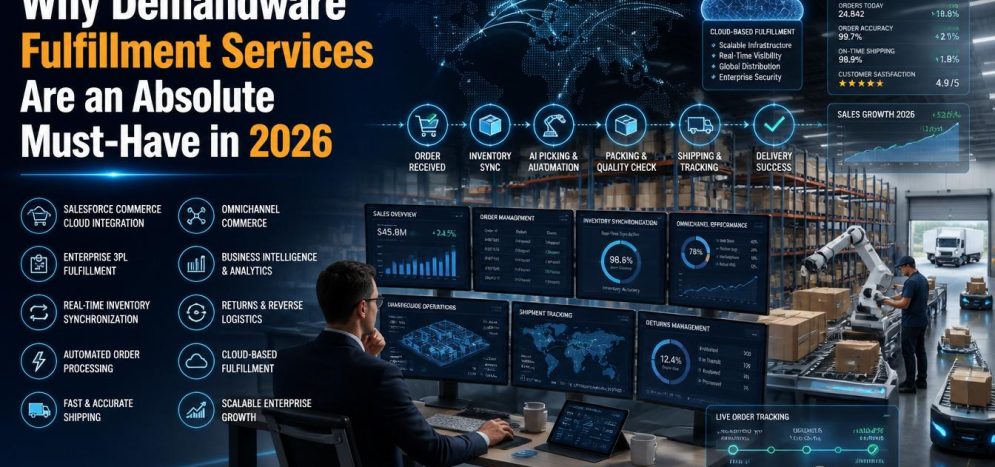
What Smarter Demandware Fulfillment Looks Like
| Area | Traditional Fulfillment | Smarter Fulfillment System |
| Inventory Tracking | Updates may be delayed | Real-time inventory visibility |
| Order Management | Manual processing | Automated order routing |
| Warehouse Communication | Separate workflows | Connected systems |
| Shipping Decisions | Basic fulfillment rules | Data-based decisions |
| Customer Updates | Delayed notifications | Automatic tracking updates |
| Business Growth | Requires more manual effort | Supports higher order volume |
Why 2026 Is the Turning Point
The biggest difference between successful e-commerce brands and struggling ones is often not the product.
It is execution.
Two companies can sell similar products at similar prices. The one that delivers faster, communicates better, and handles problems smoothly usually wins the customer.
In 2026, fulfillment has become part of the brand experience.
A customer remembers when an order arrives earlier than expected. They also remember when a package is delayed with no explanation.
Those moments shape whether they return.
Investing in Demandware 3pl fulfillment gives businesses more control over those moments.
Final Thoughts
Demandware gives brands a strong foundation for online commerce, but the customer experience does not end at checkout.
The journey continues through inventory management, warehouse processing, shipping, and delivery.
A smarter fulfillment system connects these steps together. It reduces mistakes, improves visibility, and helps businesses handle growth without creating operational chaos.
The brands preparing for the future are not only improving how customers shop. They are improving what happens after customers click “place order.”
That is where loyalty is built.
FAQs
Q1: What are Demandware fulfillment services?
A: Demandware fulfillment services help businesses manage the processes after checkout, including inventory tracking, order processing, warehouse coordination, and shipping operations.
Q2: Why do Demandware stores need smarter fulfillment systems?
A: As businesses grow, fulfillment becomes more complex. Smarter systems help manage higher order volumes, multiple warehouses, and customer expectations for faster delivery.
Q3: How does Demandware integration with a 3PL provider help?
A: Integration allows orders, inventory updates, and shipping information to move automatically between Demandware and the fulfillment provider, reducing delays and manual work.
Q4: Can smarter fulfillment systems improve customer satisfaction?
A: Yes. Faster processing, accurate inventory information, and better tracking updates create a smoother experience for customers.
Q5: Are automated fulfillment systems only useful for large businesses?
A: No. Growing businesses can also benefit because automation helps them handle more orders without increasing operational complexity.